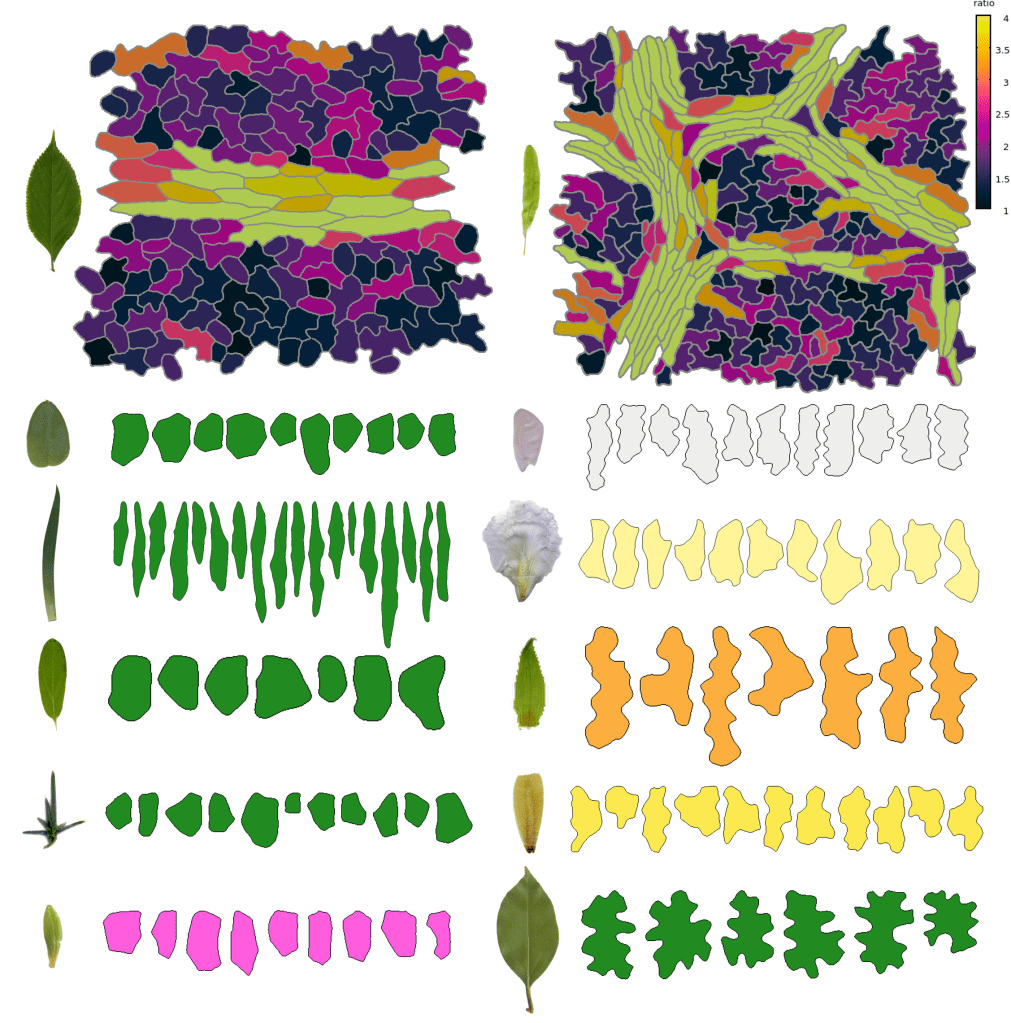
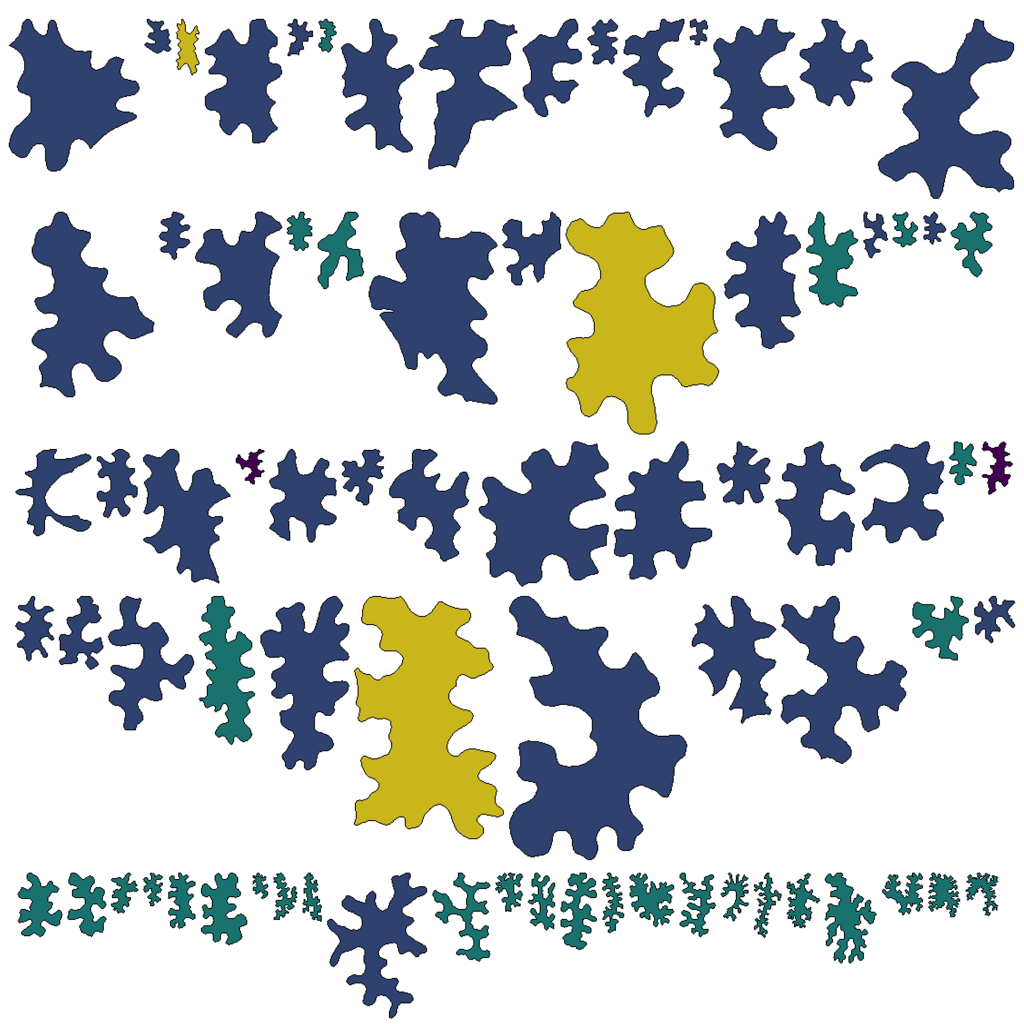
The cells in the shoot epidermis of many plants, resembling pieces of a jigsaw puzzle, feature intriguingly complex shapes. In our recent collaborative study led by Nicola Trozzi, we analyzed a broad range of over 300 living and ancient plant species. We found that the capacity to form these puzzle-like cells is universal among plants; however, their appearance can be elusive as it fluctuates based on the organ, developmental phase, and environmental factors. We performed computational modeling using Arabidopsis and maize epidermal cell templates, which demonstrated that the formation of lobey cells is dynamically associated with the plant organ’s growth trajectory and environment. On the other hand, mutants showing disrupted lobeyness or plants treated with drugs exhibit developmental changes, resulting in compensatory mechanisms involving changes in geometry, wall elasticity, and turgor pressure. Our studies suggest that the underlying process driving the creation of these puzzle-like cells is likely a conserved trait in higher plants, arising from developmental challenges related to growth and mechanical pressures.
Read more:
Puzzle cell shape emerges from the interaction of growth with mechanical constraints
Trozzi N, Lane B, Perruchoud A, Wang Y, Hoermayer L, Ansel M, Mollier C, Malivert A, Clark F, Reichgelt T, Roeder AHK, Hamant O, Boudaoud A, Kwiatkowska D, Runions A, Smith RS, Majda M



 The Mechanobiology Lab